Easy Hold'em
Easy Hold’em is poker without detours: you against the bank, a fast deal, clear decisions. You can play it straight away in the MERKUR Casinos – but first we’ll quickly explain how Ante, Flop & Co. work.
approx. 6 min.
Easy Hold'em

EASY HOLD’EM: POKER RULES & GAMEPLAY SIMPLY EXPLAINED

EASY HOLD’EM POKER IN 30 SECONDS: HERE’S HOW IT WORKS
- Game principle: You play directly against the bank (dealer) – not against other players.
- Basic structure: Start with the Ante (base bet), then you receive 2 cards. In the middle, 5 community cards are dealt face up (first 3, then 1, then 1).
- Procedure: Place the Ante → look at your cards → continue (place a bet) or fold → community cards are revealed one after the other → showdown.
- Objective: Your best 5-card hand must beat the dealer’s hand.
- Bonus: There is an optional extra bet on strong combinations – independent of the main game.
WHAT IS EASY HOLD’EM – AND WHY “EASY”?
The name “Easy Hold’em” really says it all: instead of a full table dynamic with multiple players, the focus is primarily on one thing – your direct comparison with the bank. This shifts the emphasis away from bluff stories and table psychology – the very material casino movies love to dramatise – towards one simple core question: → How strong is my hand at this moment, and am I willing to place the next bet on it?
Unlike Texas Hold’em , where you often wait until all players have bet, called or folded, Easy Hold’em is far more direct: you make your decision – the bank plays automatically.
OBJECTIVE OF THE GAME: WHAT NEEDS TO HAPPEN FOR YOU TO WIN AT EASY HOLD’EM?
Quite simply: your best 5-card hand must be stronger than the bank’s at the showdown. You form your five cards from your 2 hole cards and the 5 community cards – the best possible combination counts.
Important to know: if both sides have a hand of equal rank, the kicker (the highest side card) usually decides. And if there is a complete tie, the result is typically a stand-off/push according to the rules – meaning the round is considered a draw.
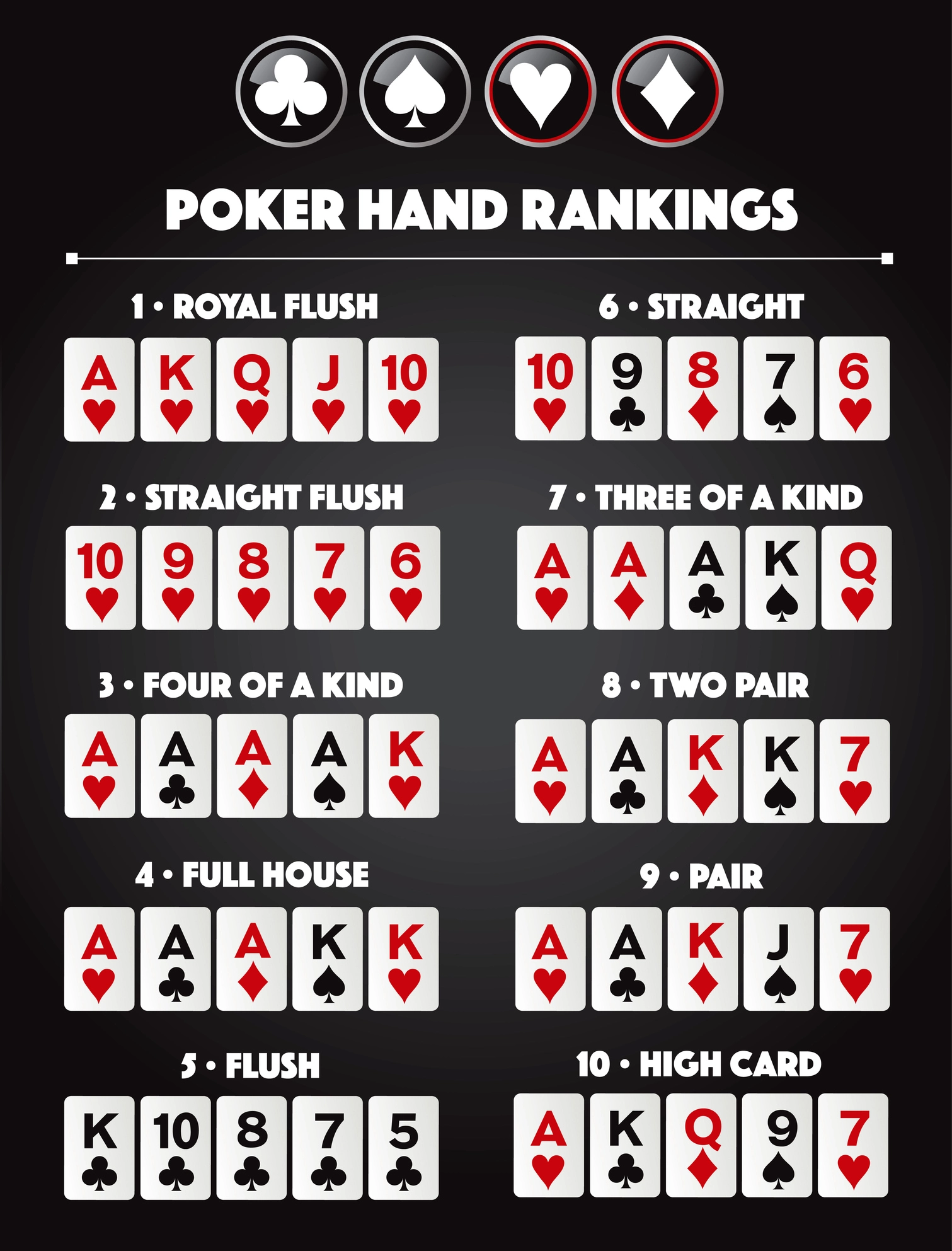
EASY HOLD’EM POKER-HANDRANKING
BETTING AREAS IN EASY HOLD’EM POKER: THESE SPOTS YOU SHOULD KNOW
Depending on the table and the rules displayed, the betting areas may have slightly different names – but the logic behind them remains identical. Once you understand these spots, meaning the labelled areas where you place your chips, you’re instantly “game-ready”:
| Ante (start) | Base bet required to start the round. |
| Flop (mandatory when choosing “Play”) | Flop (mandatory when choosing “Play”) – If you continue, in many variants you place a bet here equal to the Ante. |
| Turn (optional) | Turn (optional) – After the Flop, you decide: place a bet (in equal to the Ante) or see the next card for free. |
| River (optional) | Final decision: place a bet (in equal to the Ante) or check. |
| Bonus bet (C5/Combination 5) | Extra bet on strong combinations – independent of the duel against the bank. |
Wait a second: five betting areas and, in many slots, five reels. A coincidence? Not really – but if you’d like to keep playing with the number after your poker round, take a look at the MERKUR SLOTS , either online or directly in the casino. Here you’ll find the MERKUR classic Fruitinator or Book of Ra, a highlight from our special feature on book-themed games , and many more – reel action instead of card action.
STEP BY STEP: LET’S PLAY A ROUND OF EASY HOLD’EM TOGETHER
1 | Ante: Your ticket into the round
You place your chips on Ante. This isn’t a “blind guess”, but simply your entry into the next round: without an Ante, there are no cards.
2 | Deal: Your two hole cards
The dealer gives you two face-down cards. The bank also receives two cards – these remain face down until the end.
Example: You receive A♠ and Q♦.
For now, that means high cards – a good starting point, but not yet a made hand.
3 | The first decision: play the round or step out?
Now you look at your cards and decide:
- Fold: You end the round immediately. (The Ante is then lost.)
- Play: You place the next bet on the designated area (in equal to the Ante).
→ Important: From this point on, you generally play the round through to the showdown. Later decisions are usually between betting or checking.
4 | Flop: The board opens
The dealer reveals three cards in the middle. These count for both you and the bank.
It could look like this: Flop = A♥ – 8♣ – 2♦
You now already have a made hand: a pair of Aces (A♠ + A♥).
→ Your best 5-card hand at the moment would be: A♠ A♥ Q♦ 8♣ 2♦ – not bad.
5 | Turn: Fourth community card – from now on raise at ante level or “just see”
Now the fourth community card is dealt. Depending on the rules, you can place another bet here or continue for free.
Practical check: Turn = 9♠
Your combination doesn’t change yet: you still have a pair of Aces.
→ The key question here is: can the next card improve your pair even further?
6 | River: Fifth community card – the final boost for the hand
Now the last community card is revealed.
Possible scenario: River = Q♣
Now it gets stronger: you have two pair – Aces and Queens (A-A and Q-Q).
→ Your best possible 5-card hand is now, for example: A♠ A♥ Q♦ Q♣ 9♠.
7 | Showdown: The bank reveals – who has the higher hand?
The bank turns over its two cards and also forms the best possible 5-card hand using the community cards.
Example: If the bank only has one pair, your Two Pair wins. If both have Two Pair, the kicker – the highest remaining side card – decides.
Good to know: C5 / Combination 5
Fancy a little extra action? Then you can optionally place the C5 (“Combination 5”) bet. This is a bonus bet on strong hand combinations and is settled independently of the comparison against the bank. That means: even if you lose the main game, C5 can still pay out if you hit, for example, Three of a Kind, a Straight or a Flush (depending on the paytable). In short: a nice add-on for anyone who enjoys side bets – but not a must.
DROP BY, TAKE A SEAT, GET STARTED – PLAY EASY HOLD’EM LIVE

FAQ ZU EASY HOLD’EM
Easy Hold’em is a casino variant in which you play against the bank. You receive two hole cards, and five community cards are dealt in the middle (Flop/Turn/River). Unlike Texas Hold’em, you do not play against other players at the table – which largely removes blinds, positional play and table dynamics.
As a rule, you only have the option to fold immediately after receiving your two hole cards: you fold and the round ends for you. If you choose to continue at that point, the remaining decisions are usually limited to betting or checking.
A draw means you don’t yet have a completed strong hand, but there is a real chance it will be completed with the next card – for example, you are just one card short of a Straight or a Flush. The Turn or River can then “complete” the draw.
There’s no “magic formula”, but a few solid basic principles can help:
Assess starting hands realistically: not every high card is automatically playable.
Separate made hands from potential: a completed hand (e.g. a pair) is different from a draw (e.g. four cards to a Flush).
Make conscious decisions: if checking on the Turn or River is possible, it can be strategically valuable – you gain information and avoid unnecessary bets.
You place your Ante and then the round proceeds exactly as described in the guide: two hole cards, a decision (play or fold), followed by Flop/Turn/River and finally the showdown against the bank. And if you’re unsure at any point, the dealer will be happy to assist and show you which betting area is relevant at each stage of the game.
Where can you play Easy Hold’em? 👀
The poker variant Easy Hold’em is currently available at our MERKUR Casino locations in Braunschweig and Bad Zwischenahn. Feel free to stop by!