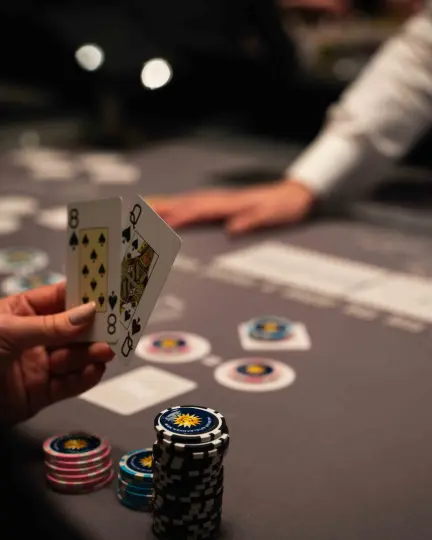
Seven Card Stud
No flop, no turn, no river – Seven Card Stud plays by its own rules. That’s exactly what creates a mix of excitement, tactics and those little “Now it’s getting interesting” moments at the tables of the MERKUR Casinos with every new card dealt. We explain Seven Card Stud, the rules and why this game takes not only luck, but also a good instinct.
approx. 8 min.
Seven Card Stud

Your guide to the world’s most honest table: Seven Stud Poker
Hand on heart: when playing poker, do you trust luck more or your own judgement? While everyone at the Texas Hold’em table is focused on the cards on the board, Seven Card Stud is much more about playing your own game while still keeping a close eye on what everyone else is doing. That’s exactly what makes it so appealing: it’s not just about strong cards, but also about attention, timing and a good feel for the table.
If you’re ready to leave the comfort zone of community cards behind, then welcome to poker in its purest form.
Quick check: Seven Card Stud poker at a glance
Seven Card Stud delivers excitement long before the showdown, with every open card adding to the tension.
- The deal: Five rounds, seven cards for each player, with no community cards at all.
- The visibility: Four of your opponents’ cards are face up. Four of yours are too.
- The goal: Build the best possible five-card hand from your seven cards.
- The mindset: Players who keep track of which cards are already gone have a clear advantage. So stay focused and switch off autopilot.
Why Seven Card Stud is a timeless classic
Did you know that Seven Card Stud was once the true star of the poker world, long before Texas Hold’em sparked the big boom? The roots of this variant stretch deep into the 19th century, and for decades it was a firm favourite in casinos, poker clubs and tournaments alike.
Up until the 1980s, there were hardly any professional players who hadn’t grown up with Seven Card Stud. It’s exactly the kind of game that captures the timeless elegance of classic casino films , where every revealed card completely changes the dynamic at the table. And so you can join the conversation at the pros’ table straight away, it’s time for the practical part: we’ll explain the Seven Card Stud poker variant, including the rules and everything you need to know for your first round.
By the way: the first slot machines also date back to the 19th century. Back then, the concept was simple: three reels and basic mechanics. And today? Elaborate themes, multiple paylines, extra games and exciting bonus features. If you’re in the mood for modern entertainment, take a look at MERKUR SLOTS : Book of Ra or Fruitinator show just how much the experience has evolved.
Seven Card Stud explained: how the game works step by step

Your roadmap to Seven Stud poker
1 | How the round begins: Ante, Hole Cards and Door Card
Before the action starts, all players pay a small compulsory bet known as the ante. The dealer then deals three cards to each player: two face down and one face up.
The two face-down cards are known only to you – they are often called Hole Cards . The face-up card is visible to everyone at the table and is called the Door Card.
2 | Third Street: Bring-in and the first action
The first betting round is called Third Street. Usually, the player with the lowest face-up card starts by paying the bring-in, a compulsory opening bet.
Play then continues clockwise around the table. Depending on the situation, you now have these basic options:
- fold : You give up your hand and are out for this round.
- call : You match the current bet and stay in the game.
- raise: You increase the bet and make the round more expensive for the other players.
Important: At the beginning of this round, checking is not an option because the bring-in has already put a bet on the table.
3 | Fourth Street: the next face-up card
All remaining players now receive another face-up card. This makes the picture at the table clearer: pairs, promising draws or dangerous developments become easier to spot.
If nobody has bet before you, you can now often:
- check : You stay in the hand without adding any chips.
- bet: You place the first bet of this round.
If someone has already bet before you, your usual responses are once again:
- fold
- call
- raise
4 | Seventh Street: the final downcard & the showdown
The seventh and final card, also known as the downcard, is dealt face down once again. At this point, just like everyone else, you have a total of three face-down and four face-up cards in front of you.
Important: Nobody but you knows whether your hand has just received the decisive boost. The final betting round now follows.
If at least two players remain after that, the game goes to the showdown. The face-down cards are revealed and compared. The winner is the player who can make the best five-card hand from their seven cards.
👉 Pro tip for beginners: Always keep an eye on the other players’ exposed cards to judge which cards are still in play. For example, if you’re hoping for a heart flush but several hearts are already visible in your opponents’ hands, you immediately know your chances are much lower.
A simple way to remember the card sequence: the 2-4-1 principle
Two down: You start with two face-down cards. These are your secret Hole Cards.
Four up: This is followed by four face-up cards, dealt one after another.
One down: The seventh and final card is dealt face down once again.
Why Seven Card Stud is so different
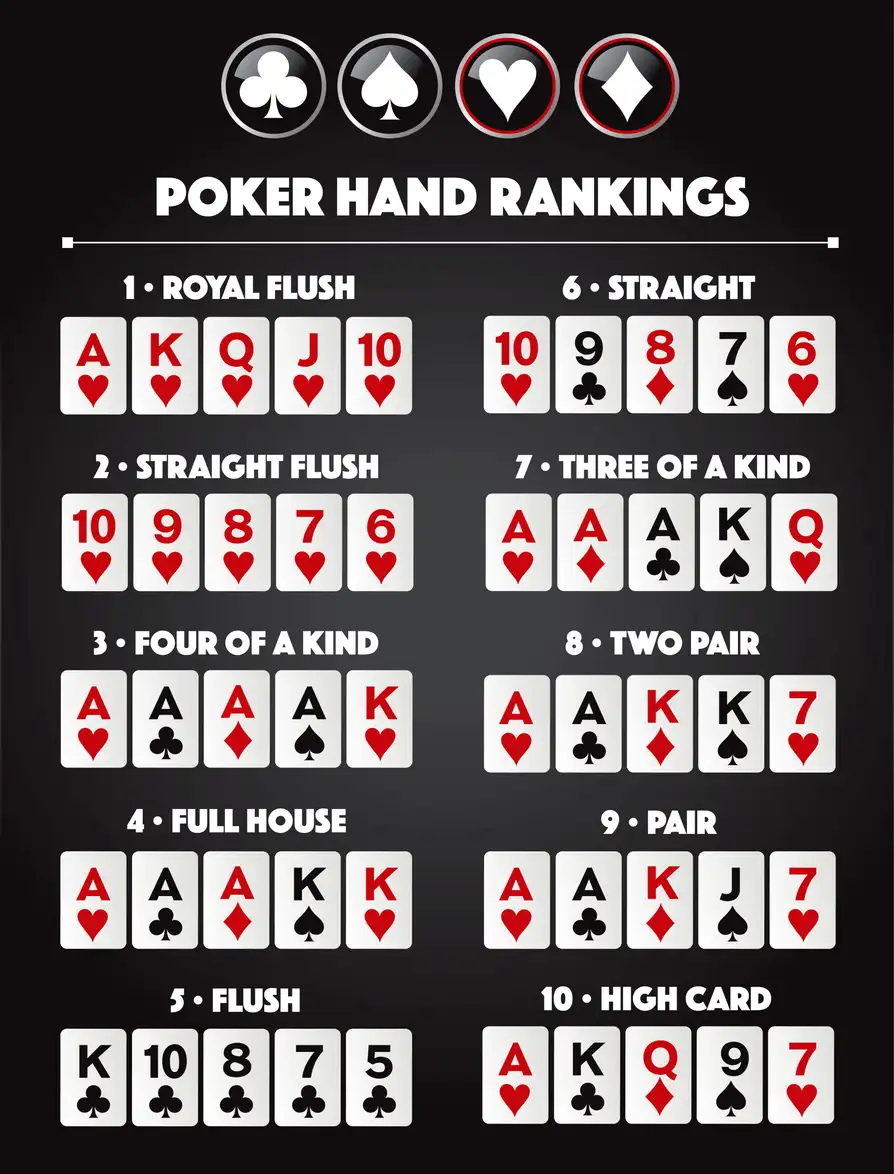
Seven Stud strategy: five tips for getting started
- Less is often more: Don’t play too many starting hands. A solid start can save you from expensive decisions later on.
- Read the exposed cards: The visible cards of the other players reveal what is currently possible at the table.
- Be honest about your draws: A draw is a hand that can still become strong with the right card – for example, by completing a straight or a flush.
- Pay attention to your outs: Outs are the cards that would improve your hand. But they only help if they are still in play.
- Take dead cards seriously: These are the cards you need that are already visible in other players’ hands. The more of them you can see, the weaker your plan becomes.
If Seven Card Stud leaves you wanting more
Let’s be honest: some games are simply most enjoyable when you’re right in the middle of the action. Seven Card Stud definitely belongs in that category. If the unique feel of the game has sparked your interest, come and visit one of our MERKUR Casinos and experience poker live. And because a great gaming night doesn’t have to end there, you’ll also find plenty of action with MERKUR SLOTS: in the special feature category Book Games , titles such as Book of Luxor Wild are waiting for you, while Sweet Bonanza takes you straight into a playful world of sugar and sweets. Sounds good? Then don’t just read about it – get started right away.
FAQ about Seven Card Stud
In Texas Hold’em, you receive just two private hole cards and combine them with the five community cards in the middle of the table. In Seven Card Stud, on the other hand, you are dealt seven individual cards and build your best possible five-card hand without any shared board.
The key differences:
- Texas Hold’em: everyone uses the same community cards in the middle
- Seven Card Stud: each player builds their hand entirely from their own cards
- Texas Hold’em: greater focus on the flop, turn and river
- Seven Card Stud: greater focus on exposed opponent cards, reads and memory
Yes, absolutely. At first, Seven Card Stud may seem a little more demanding than other poker variants, but it is still very beginner-friendly. The structure of the game is straightforward, and with each round you develop a better feel for how a hand evolves.
The real challenge lies less in the basic rules and more in reading the game: paying attention to exposed cards, judging your chances correctly and recognising which cards may already be out of play. And that is exactly what makes Seven Card Stud so appealing.
In Seven Card Stud, both are equally important. Your Hole Cards – the face-down cards in your hand – are naturally crucial because they form the foundation of your hand. At the same time, the exposed cards at the table provide key information about how strong your opponents appear to be and which cards are still in play. In short: your Hole Cards set the direction, while the exposed cards help you make the right decisions.
On Third Street, the action starts with the player showing the lowest Door Card, meaning the lowest exposed starting card. That player must pay the bring-in. In the following betting rounds, the player with the strongest exposed card combination normally acts first. This means the order of play can keep changing throughout the hand. In the event of a tie, the suit determines the winner. Clubs rank lowest, followed by diamonds, hearts and spades. The so-called “bring-in” is the equivalent of the big blind in Texas Hold’em.
Usually a little longer than in many other poker variants. The reason: there are five betting rounds, and the dealer distributes the cards to the players one at a time. How long a hand actually takes depends on how many players are involved and how long they stay in the hand.
Where can you play Seven Card Stud? 👀
We currently offer the Seven Card Stud poker variant exclusively at our MERKUR Casino Bad Zwischenahn . Feel free to stop by!