Bluffing – Do It Right!
Bluffing is one of the most exciting strategies in poker: learn about different types of bluffs, effective bluffing strategies, and tips for mastering an unbeatable poker face.
approx. 4 min.
Bluffing – Do It Right!

Learn how to bluff
Hardly any term is as closely associated with poker as bluffing. Whether in movies, at major tournaments, or in private poker games, a successful bluff is considered one of the most spectacular plays in the game. However, bluffing is much more than simply trying to deceive other players with the perfect poker face. It is one of poker’s key strategic and psychological elements and, when used correctly, can have a significant impact on the course of a game.
A bluff occurs when a player pretends to have a strong hand even though their cards would not normally be good enough to win at showdown. By betting or raising, the player aims to create the impression of holding a particularly strong card combination. The goal is to persuade opponents to fold and win the pot without having to reveal the cards.
Bluffing is an integral part of many poker variants, including Texas Hold’em , No-Limit Texas Hold’em and Seven Card Stud . It adds an extra layer of excitement and makes poker a game in which not only the cards matter, but also strategy, observation skills, and the ability to read other people.

How can I bluff?
A pure bluff is probably what most people think of when they hear the word poker. Imagine your cards are about as useful as an umbrella in a snowstorm: you have a weak hand and very little chance of improving it with the upcoming cards.
Yet you bet or raise with complete confidence. Why? Because you hope your opponents will believe that you are holding a very strong hand. The success of a pure bluff depends almost entirely on convincing the other players to fold.
For example, you are holding 7-2, one of the weakest starting hands in Texas Hold’em. The flop does nothing to help you. Nevertheless, you bet decisively, as if you had just hit the perfect card combination. If your opponents buy the story and fold, you win the pot without ever having a strong hand.
A pure bluff is a bit like a great acting performance: the more convincing you are, the more likely others are to believe you.
A semi-bluff is essentially the smarter version of a pure bluff. Your hand is not currently strong enough to win with confidence, but it has a good chance of improving with the upcoming community cards.
Imagine you are holding two hearts, and there are already two more hearts on the board. You only need one additional heart to complete a flush. Right now, you do not have a strong hand, but the potential is definitely there.
If you bet at this point, you have two ways to succeed:
- Your opponents fold immediately, and you win the pot.
- If someone calls, you still have the chance to improve your hand later and win the round anyway.
That is exactly why the semi-bluff is so popular. It follows the principle: “Either you fold now – or I might improve to the better hand later.”
Put differently: while a pure bluff is like jumping into cold water, a semi-bluff means you are at least wearing a life jacket.
A continuation bet, or C-bet for short, means making another bet on the flop after having already bet or raised before the flop – even if the community cards have not improved your hand at all.
Why do players do this? Quite simply: by betting before the flop, you have already represented strength. A continuation bet allows you to continue telling that same story.
For example, you raise before the flop, signaling a strong hand. The flop arrives – and completely misses your cards. Nevertheless, you bet again. To your opponents, it often looks as though you have hit exactly the cards you were hoping for.
A bluff C-bet works particularly well when the community cards appear unfavorable for your opponents, too. Many players will think: “If they raised before the flop and are betting again now, they probably have something strong.”
A continuation bet is a bit like telling a good story. If you make a convincing impression at the beginning, you should stick to the narrative. Whether your story is actually true often remains unknown until no one is willing to fold anymore.

Bluffing is therefore not just about the cards – it is also about understanding people, interpreting situations, and presenting a believable story at the table. The more convincingly a player represents a strong hand, the more likely opponents are to question their own cards and consider folding.
This psychological element is one of the reasons why poker remains so fascinating: success often depends not only on the cards you are dealt, but also on how well you understand and influence the decisions of others.
The Risks of Bluffing
As exciting as a successful bluff can be, it also comes with significant risks. If a bluff is detected or called by an opponent holding a strong hand, a player can lose a substantial number of chips.
Bluffing too often can also make your play predictable. Experienced opponents pay close attention to betting patterns and will adjust their strategy accordingly. That is why bluffing is not considered an end in itself in poker, but rather a strategic tool that should be used selectively and with careful consideration.
The most effective bluffs are those that fit naturally into the flow of the hand and are supported by a believable story. When used at the right moment, bluffing can be a powerful weapon – but when overused, it can quickly become an expensive mistake.
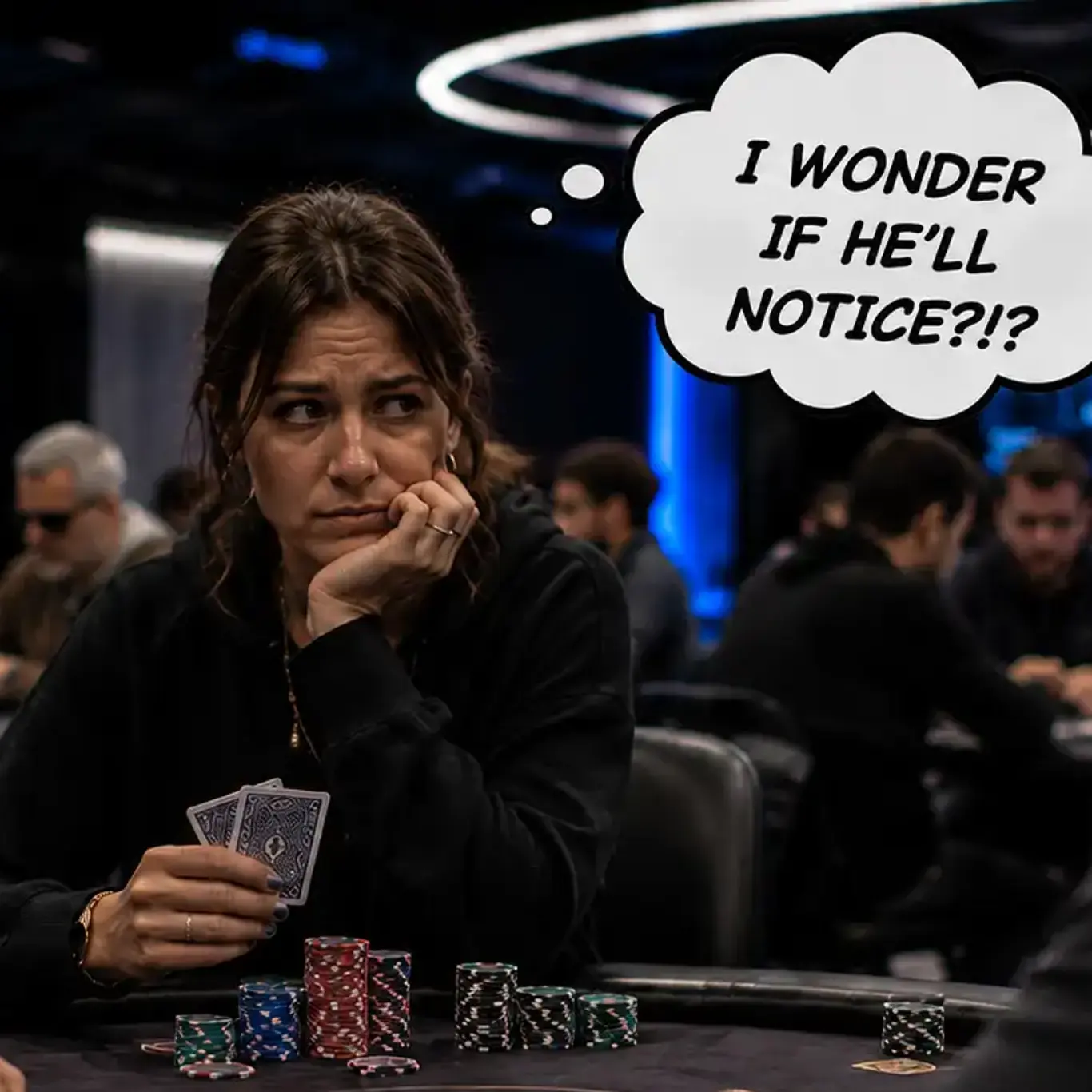
The goal of a poker face is to remain consistent regardless of whether you are holding a strong hand, a weak hand, or attempting a bluff. The less information you give away, the more difficult it becomes for your opponents to read your intentions.
In the end, a strong poker face is not about acting – it is about maintaining control. The more neutral and composed you remain, the harder it is for others to gain an advantage from your reactions.
Conclusion: More Than Just Deception
Bluffing combines strategic thinking with psychological skill and is a major part of what makes poker so fascinating. Successful bluffs rarely rely on courage alone. Instead, they are based on a combination of experience, observation, timing, a strong understanding of the situation at the table, and a convincing poker face.
Anyone who understands the fundamentals of bluffing gains a deeper insight into the complex world of poker – and begins to see why the game is about far more than just the strength of the cards.