Ski Jumping Rules
From K-Point and Wind to Style Scores and Lucky Losers: How Ski Jumping Really Works – Rules, Scoring & Tips for Your Betting Slip.
approx. 5 min.
Ski Jumping Rules

Ski jumping looks simple – take off, fly, land. But the difference lies in the details: if you know the ski jumping rules, you’ll quickly understand why one jump scores big points – and another doesn’t. And that’s exactly what helps with tips and odds too: less gut feeling, more strategy. We explain ski jumping rules & scoring and bring order to metres, style & more.
Quick check: ski jumping rules & scoring
So you’re instantly up to speed, here are the four building blocks that make up ski jumping scoring – and that have the biggest impact on tips and odds:
Distance (metres) → distance points around the K-point: this is the base, above/below means plus/minus per metre.
Style scores → 5 judges rate flight & landing; the best 3 scores count, the highest and lowest are discarded.
Wind points → compensation because headwind/tailwind affects jumps.
Gate points → compensation when the inrun gate is adjusted.
Rule of thumb: distance gets you forward – style + wind/gate often decide who really ends up on top.
From World Cup check to Tournee stage – why ski jumping rules are twice as exciting right now
Mini example: ski jumping explained – how to read the TV graphic
Let’s dive straight in: after a jump, you’ll usually see four blocks in the TV graphic. And these show you within seconds why someone is leading – even if the distance doesn’t look like it at first glance.
Distance → points for the metres
Style → scores for flight & landing
Wind → compensation points depending on conditions
Gate → compensation points when the inrun gate has been adjusted
Your job at one of the biggest sporting events of 2025 as a betting fan is simple: watch which block is making the difference.
One scenario: a jumper lands a few metres shorter but gets significant wind points – and still leads. That may seem surprising at first, but that’s exactly the point of the system: conditions are meant to be made more comparable.
→ Important to know when odds suddenly move during live betting: wind & gate are often the reason – don’t immediately interpret it as a “loss of form”.
Ski jumping scoring in three steps – how the total score is made up
On TV, a jump can quickly look like “far or not far” – but in ski jumping, points are not only awarded for metres. Distance, style and conditions shape the score – and only then does the ranking make sense.
Distance points: K-point + points per metre
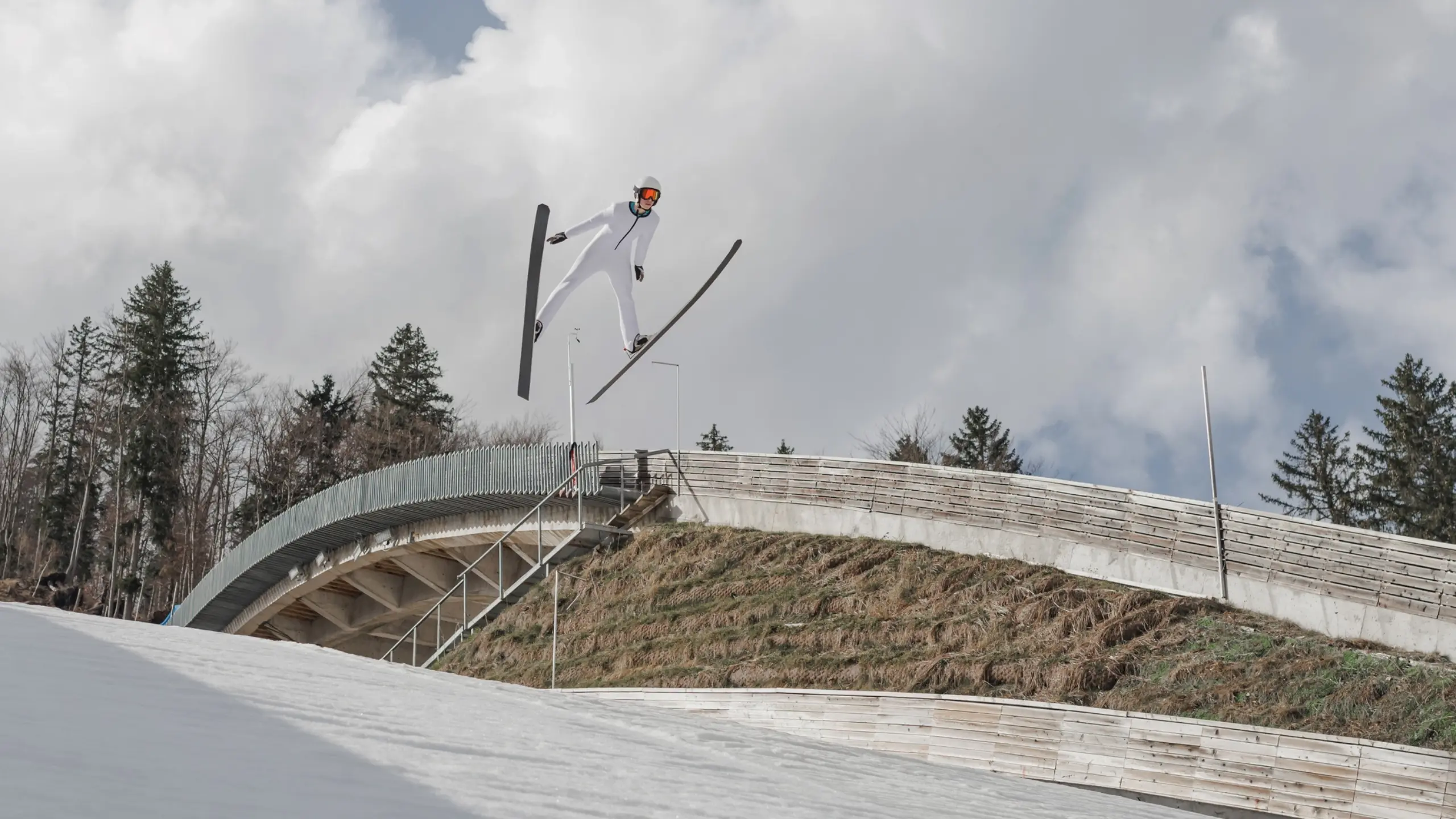
The K-point is the reference of the hill. From there, calculations are made: every metre beyond earns plus points, every metre below costs points. How much a metre is worth depends on the size of the hill – which is why a few metres’ difference is not automatically a knockout.
→ Example: Jumper A jumps a few metres further. Jumper B is slightly shorter – but if B later earns better style scores, the advantage can disappear quickly.
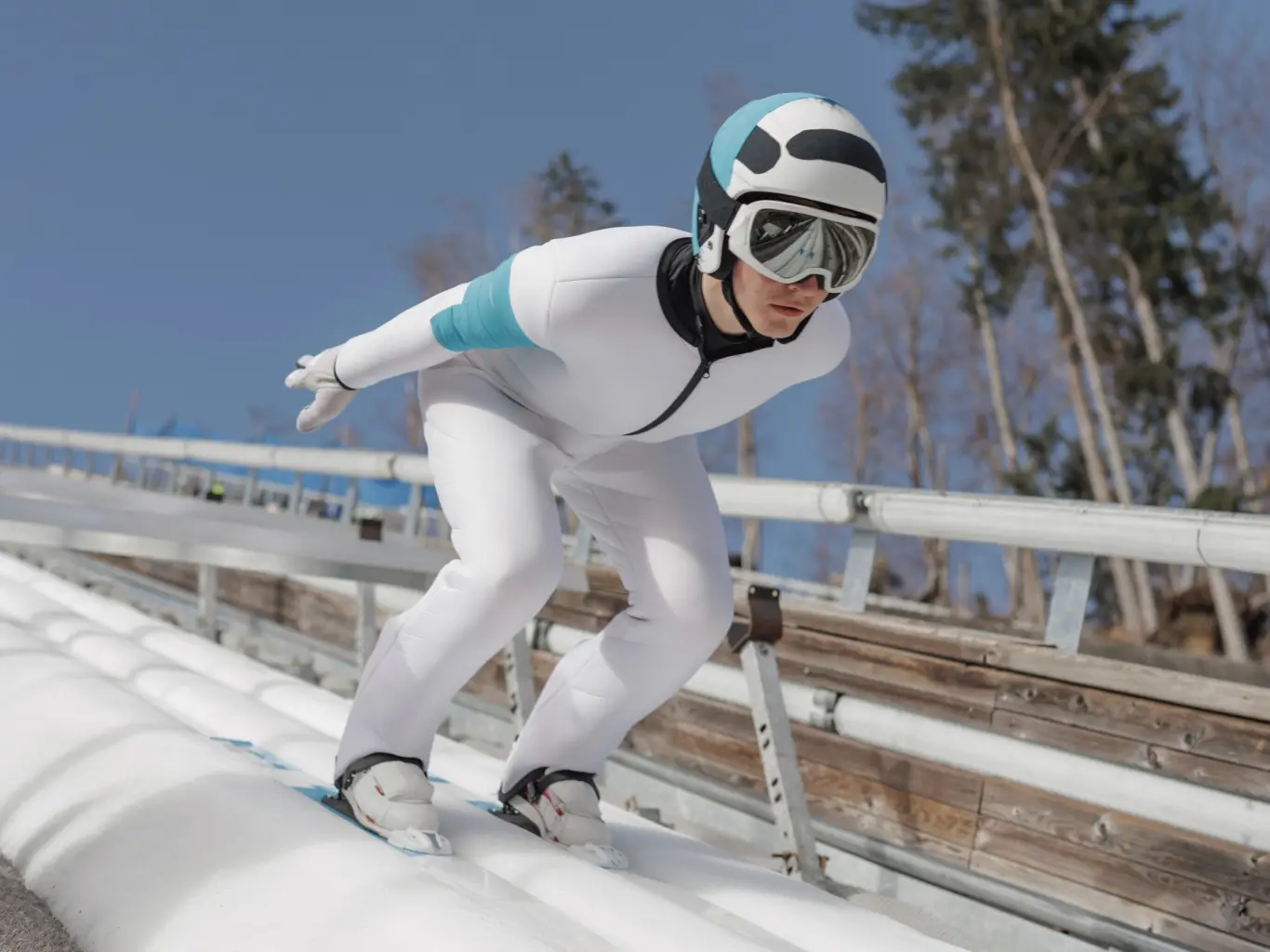
Style scores: what the judges assessFive judges assess flight and landing. They look at things you can easily recognise when watching:
- calm flight without major corrections
- stable ski control
- clean landing (telemark often acts like a points booster)
→ Important ski jumping rule: the highest and lowest score are discarded, the three middle scores count. For your sports betting strategy, that means: one wobble can noticeably cost points – even if the distance was strong.
Wind & gate: why these points exist in ski jumping – and when they really matter
Because ski jumping takes place outdoors, wind is taken into account via compensation points. The same applies to the gate: when the jury adjusts the inrun gate, speed changes – and with it the distance. Gate points are intended to fairly balance this change.
→ When this becomes particularly important: when conditions change. Then jumps can sometimes seem “unexpected” in terms of points – but are completely within the rules. This is also exactly the moment when live odds often react quickly.
Interim conclusion: the longest jump does not automatically win, because in ski jumping the scoring is always a mix of distance, style and conditions. Those who jump cleanly and consistently are often more dangerous for the rankings than someone who only produces one set of “monster metres”.
Four Hills Tournament rules: KO system, lucky loser & what it changes
At the Four Hills Tournament, the basic rules remain the same: points come from distance, style and conditions. The big twist lies in the format – and that’s what makes the tournament feel different from a “normal” World Cup event:
→ KO system in the first round: duel instead of pure ranking
Instead of simply sending the best 30 into the final after the first round, the Tournee uses duels:
- 50 jumpers compete in pairs.
- Whoever wins their duel advances to the final round.
- So you’re not just jumping “against the field”, but directly against an opponent first.
→ Lucky loser: even losers can advance
And now comes the back door that many love: lucky losers.
The best losers from the duels still move into the final – because 30 jumpers are needed in the end. For spectators, extremely exciting; for your Four Hills Tournament bets, sometimes the moment when an “actually okay” jump suddenly becomes hugely important.
Ski jumping and bet slip logic: popular betting types at a glance
If you prefer clarity and comparability in ski jumping, head-to-head bets (duel Jumper A vs Jumper B) are often a good entry point – you compare two jumpers directly instead of having to “beat” the whole field. You can bundle several tips into an accumulator bet: higher odds, but every tip has to land. With a system bet, you build yourself a safety net in case one selection fails. And if you want to go deeper, arbitrage betting is a category of its own – here you distribute stakes so that you end up with a similar result regardless of the outcome.
Typical mistakes you can easily avoid
Only looking at metres and ignoring style/wind/gate.
Stubbornly betting on winners in unstable conditions, even though a duel or top-X market would often be cleaner.
Live betting “after the fact” without checking why points and odds are shifting.
That’s not the full list. At MERKUR, depending on the event, you’ll find further betting types and special markets – just take a look, pick, and build your bet slip. Here you’ll also find our cashout function to secure guaranteed winnings and minimise losses.
More clarity, less gut feeling in ski jumping – know the rules, bet smarter
Ski jumping is a sport where small details become huge – and that’s exactly why upgrading your rule knowledge is worth it. If you correctly assess distance, style as well as wind and gate, the points no longer feel random, but logical. That helps when watching, but also when betting with MERKUR BETS: you recognise more quickly when a duel is “stable” and when conditions are shaking everything up. In short: if you have the ski jumping rules in your head, every jump makes more sense – and your decisions feel far less like pure gut instinct.
FAQ on ski jumping, rules & betting
Do qualification and trial rounds count towards the ski jumping scoring?
No – as a rule, only competition jumps count towards the scoring. Qualification and trial rounds are mainly important for assessing form, inrun and conditions. For betting, however, they can still be worth gold, because you often see who is already “dialled in”.
What happens if a jumper is disqualified – and what does that mean for my bet?
A disqualification can occur, for example, due to equipment or material regulations. Result: the jump does not count or the jumper is removed from the rankings – and many betting markets are immediately affected. For you, that means: especially with winner bets, there’s always an extra risk that simply can’t be talked away.
How does the start order work in ski jumping – and why is it relevant for betting?
In ski jumping, not everyone jumps “just like that”: the start list is based on qualification/ranking, and in the final round it’s often sorted by intermediate standings (the best jump later). This can be important because wind and gate can change over time – and later starters sometimes face different conditions than earlier ones.
Which ski jumping bets are most suitable for beginners?
If you’re new, head-to-head/DUEL bets are often the best place to start, because you only have to compare two jumpers. Next come “top-X” markets (e.g. top 10), because they offer more buffer than a straight winner bet. And if you’re betting live: only place your bet once you can reasonably “read” wind and gate effects – otherwise it quickly becomes pure guesswork.