13 Aug 2026 | Sportsbetting
Vuelta a España: The Toughest Cycling Race of the Summer
Rules, jerseys, stages, rider types, and the history of the Vuelta a España. The Vuelta a España cycling race explained simply at MERKUR BETS!
approx. 3 min.
Vuelta a España: The Toughest Cycling Race of the Summer

The Vuelta a España is the third and final Grand Tour of the season—and also the toughest. Twenty-one stages, three weeks, two rest days: The rider with the lowest total time at the end wins the Red Jersey.
Unlike the Tour de France and the Giro d'Italia, the Vuelta a España is characterized by short, steep climbs rather than long Alpine passes. Add to that the heat of the Spanish late summer. Hardly any other stage race demands so much from the riders.
What Makes the Vuelta a España Cycling Race Special
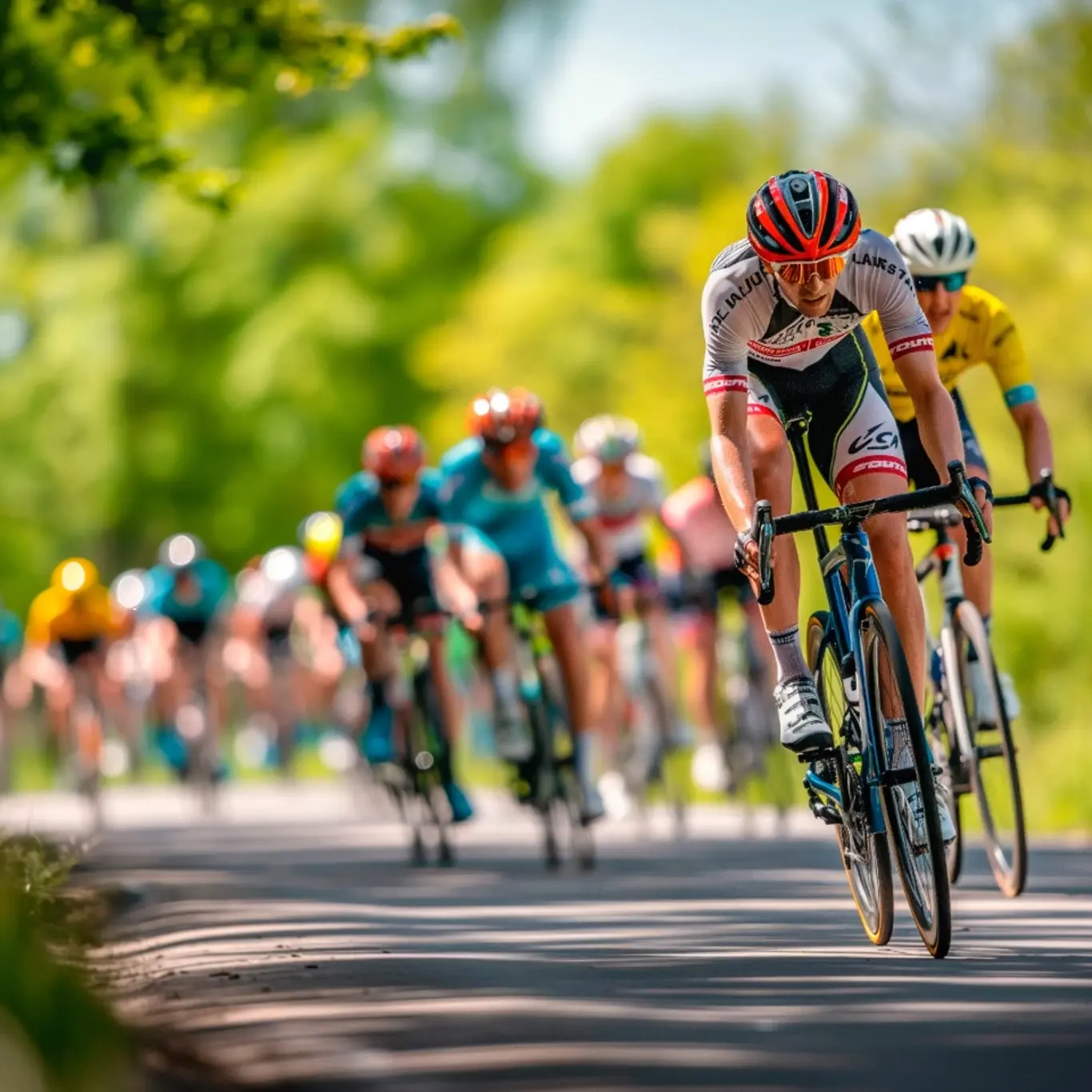
The Rules of the Vuelta a España
- 21 stages over three weeks, plus two rest days
- Typically 23 teams with eight riders each: 18 UCI World Teams plus five ProTeams
- The race is decided by time: The rider with the lowest total time across all stages wins the Red Jersey
- Bonus seconds: ten, six, and four seconds for the top three finishers at the stage finish—except in time trials. An additional three, two, and one second are awarded at intermediate sprints and designated mountain climbs.
- Drafting is allowed; only in individual time trials does each rider race alone against the clock
- Three-kilometer rule: Anyone who crashes or experiences a mechanical issue in the final three kilometers is credited with their group’s time. This does not apply to mountain finishes and time trials.
- Four classification jerseys: Red for the general classification, green for points, white with blue dots for the mountains, and white for the best young rider.
- Yellow card: mandatory as of January 1, 2025. Two cards in the same race result in disqualification and a seven-day suspension.
The History of Spanish Cycling
Like so many cycling races, the Vuelta owes its existence to a newspaper: In 1935, the Madrid-based *Informaciones* launched the first Tour of Spain, modeled after the Tour de France and the Giro d'Italia, which had long been established by that time.
The key milestones:
- 1935: The first edition began on April 29. Of the 50 riders who started, only 29 reached the finish line in Madrid after 14 stages and 3,425 kilometers.
- Winner of the inaugural race: Belgian Gustaaf Deloor, with a lead of over eleven minutes.
- 1937 to 1940: No Vuelta due to the Spanish Civil War, followed by another hiatus due to World War II.
- Since 1955: The race has been held annually
- 1995: Moved from spring to late summer, ending the scheduling conflict with the Giro
- Since 2010: The overall leader wears red—previously, the jersey was orange, yellow, and, from 1999 to 2009, gold, among other colors
The change in dates in 1995 was the decisive turning point. Scheduled between the Tour de France and the World Championships, the Vuelta finally secured its own spot on the calendar and, as a result, attracted significantly stronger fields.
La Vuelta 2026: From Monaco to Granada
- The 81st edition of the Vuelta will take place from August 22 to September 13, 2026, and will introduce two changes to the traditional format: For the first time, the race will start in the Principality of Monaco, and the finale will take place in Granada rather than Madrid. Along the way, the peloton will pass through four countries: Monaco, France, Andorra, and Spain.
- Key figures: 21 stages, 3,310.6 kilometers, 58,156 meters of elevation gain, two rest days. Seven mountain stages and two individual time trials totaling 41.5 kilometers make this route one of the most challenging in the recent history of the Vuelta.
The Key Stages
| Stage | Route | Why It's Important |
| 1 | Monaco – Monaco, 9 km (EZF) | A short, technical time trial, partly on the Formula 1 track. This is where the first seconds in the standings are gained. |
| 3 | Gruissan – Font Romeu, 166.7 km | First true mountain finish at 1,952 meters in the Pyrenees. The favorites reveal their hands |
| 18 | El Puerto de Santa María – Jerez de la Frontera, 32.5 km (EZF) | Mostly flat and the last big opportunity for time trial specialists |
| 20 | La Calahorra – Collado del Alguacil, 187 km | The queen stage, with over 5,000 meters of elevation gain: two climbs up to Alto de Hazallanas, then over the Purche to the Category Special mountain finish |
| 21 | Carrefour Granada – Granada, 99.4 km | No show: four climbs up to the Alhambra. A finale for puncheurs that could still shake up the overall standings a bit |
Who will win the Vuelta a España?
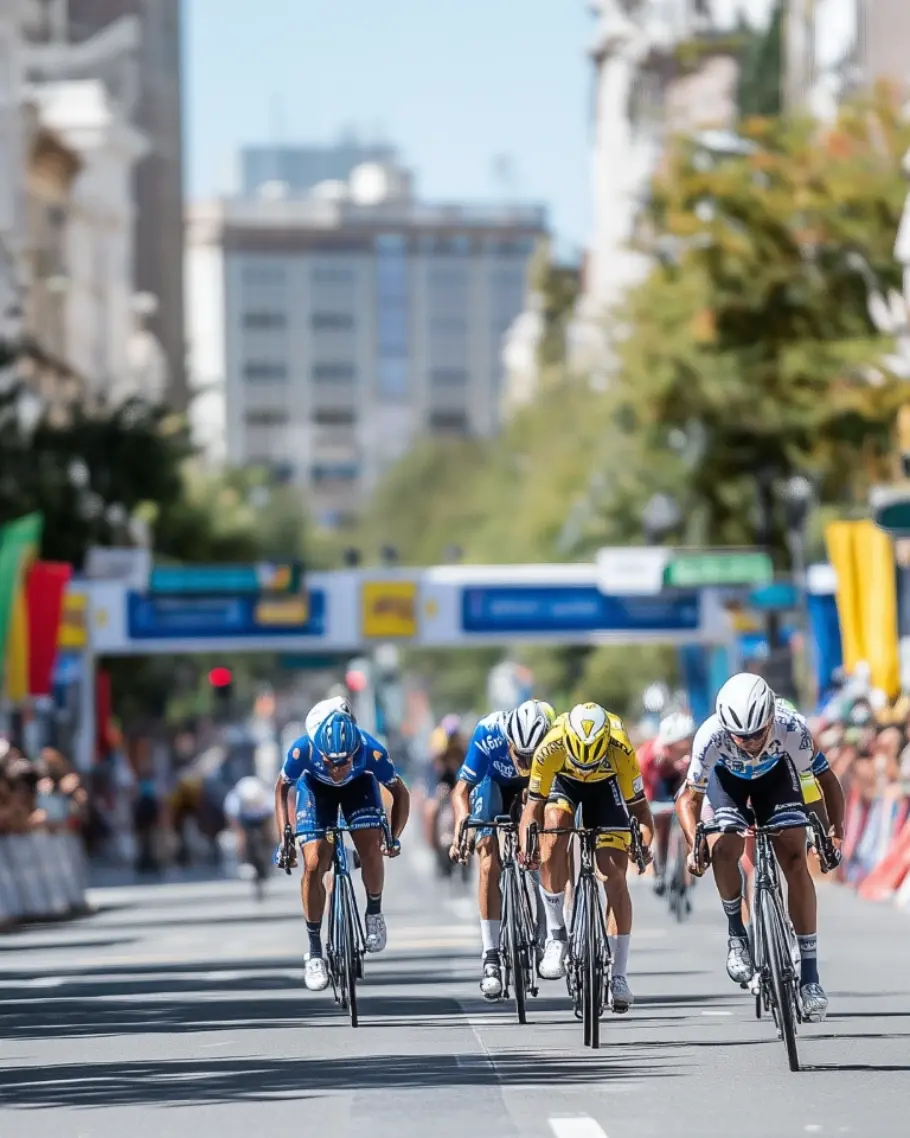
A look at the list of winners confirms this pattern. The record holders are Spain’s Roberto Heras and Slovenia’s Primož Roglič, each with four overall victories. Neither is a time-trial specialist, but rather riders who were able to attack time and again on the climbs. Most recently, Denmark’s Jonas Vingegaard came out on top.
The depth of the team is also important. Over three weeks of heat, it’s not just the captain who makes the difference, but also how long his teammates can protect him.
La Vuelta at a Glance
The Vuelta a España is the youngest and, at the same time, the toughest of the three Grand Tours: 21 stages, three weeks, decided on short, steep climbs rather than long Alpine passes. Add to that the heat of the Spanish late summer, which takes just as much of a toll over three weeks as the elevation profile.
Climbers and puncheurs stand to gain the most here. Because there are few kilometers of time trials and seconds—rather than minutes—are lost on the climbs, the race for the Red Jersey often remains open until the final week. That’s exactly what makes the Vuelta a España such a must-see cycling race year after year.
Your Sports Bet at MERKUR BETS
Now you know the rules, the history, and the types of riders who make a difference in the Tour of Spain. At MERKUR BETS , you’ll find sports betting on the biggest events of the year with attractive odds and a wide selection of bet types.
FAQs About the Vuelta a España
The Vuelta consists of 21 stages and takes place over three weeks. The race is decided by time: The rider with the lowest total time across all stages at the end wins the Red Jersey and thus the race. Bonus seconds—10, 6, and 4 seconds—are awarded to the first three riders to cross the finish line, except in time trials. Drafting is allowed, but not in individual time trials.
There are four classification jerseys in the Vuelta a España. Red is worn by the overall leader based on time, and green by the leader of the points classification. The white jersey with blue polka dots belongs to the best climber, and the plain white jersey to the best young rider. If a rider leads multiple classifications, the order of precedence is red, then green, then polka-dot, then white.
The Vuelta a España features short, extremely steep climbs instead of long Alpine passes—the so-called “Muros,” with gradients exceeding 10 percent. Added to this is the heat of the Spanish late summer, with temperatures regularly exceeding 35 degrees. Many professionals therefore find the race more physically demanding than the Tour de France and the Giro d'Italia.
Climbers and puncheurs. The short, steep climbs demand explosive bursts of power rather than consistent wattage. Time trial specialists rarely keep up on the climbs, but they gain seconds that count in the battle for the podium. Sprinters are at a structural disadvantage and often drop out after the second week.
The record holders are Spain’s Roberto Heras and Slovenia’s Primož Roglič, each with four overall victories. Heras won between 2000 and 2005, while Roglič won three times in a row from 2019 to 2021 and a fourth time in 2024. Neither was a time trial specialist; rather, they were riders with strong climbing ability.